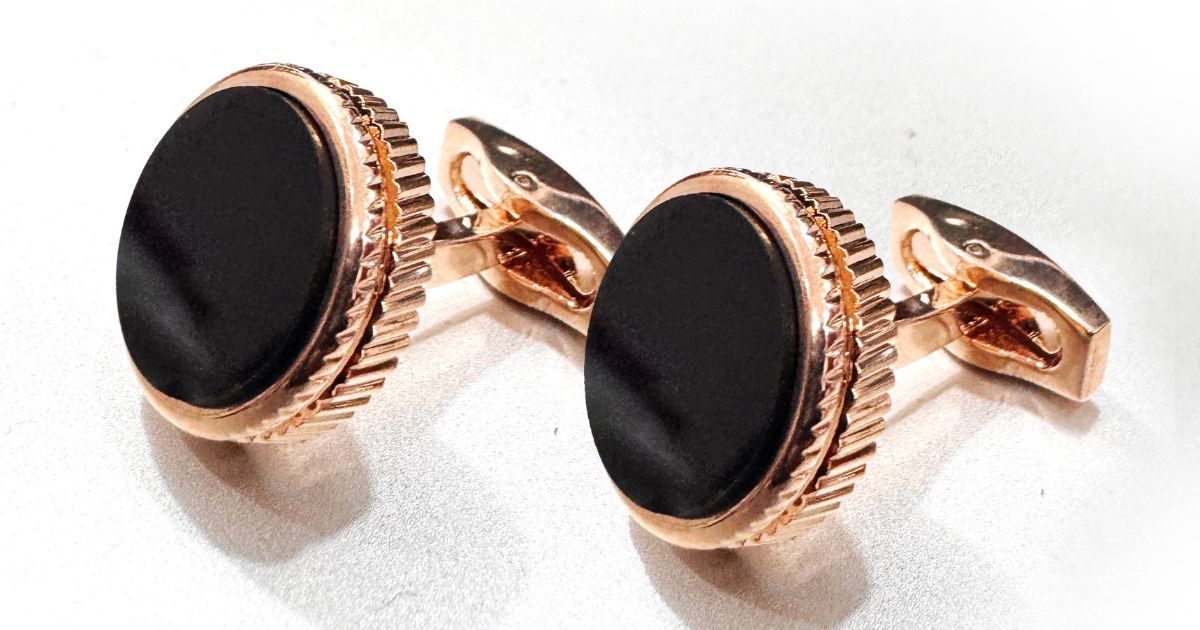
Why You Should Invest in Quality Cufflinks
You have probably been through this at least once. You buy a pair of cufflinks because they look decent, the price feels reasonable, and you need something to wear to an upcoming event. They look fine on the day but within a few months the finish has dulled noticeably, the clasp mechanism feels loose, or one of the backs has gone missing entirely and you cannot find a replacement that fits correctly. So you replace them. The cycle repeats.
Most men who wear cufflinks regularly have lived this pattern more times than they would like to admit. And most of them attribute it to bad luck or poor quality control rather than the actual cause, which is consistently buying cufflinks at a price point that cannot sustain the construction quality required for long-term daily wear.
This guide makes the case for why investing in quality cufflinks is not a luxury decision but a genuinely smarter financial and style decision. And it tells you exactly how to recognize that quality before you spend your money.

Why Most Men Keep Replacing Cheap Cufflinks and Never Build a Real Collection
Most Nigerian men who wear cuff links have replaced them more times than they would like to admit and almost none of them have stopped to calculate exactly how much that replacement cycle has actually cost them. Here is exactly why it keeps happening and why it is more expensive than it feels.
- Cheap cufflinks are built to look good not to last
The appeal at the point of purchase is completely understandable. The price feels low, the finish looks acceptable, and for the specific event you are buying them for they will probably do the job adequately. The problem is that cheap cufflinks are built for display cases and product photographs, not for regular insertion into shirt cuff buttonholes, repeated handling across many wears, or exposure to the skin oils and Lagos humidity that accelerate tarnishing on low-quality metal finishes faster than most people anticipate.
- The deterioration follows the same predictable pattern every time
The bright finish dulls within a few months of regular wear. The clasp mechanism loosens and eventually fails to hold the cuff securely through a full professional day. In some cases the decorative face separates from the base mechanism entirely leaving the wearer with a broken accessory at the worst possible moment. Each of these failures triggers a replacement purchase that restarts the same cycle rather than building toward a collection that actually grows in quality over time.
- The real cost is significantly higher than most men realize
Three or four cheap cufflink purchases across two years often cost more in total than a single quality pair would have cost at the very beginning of that same period. The only meaningful difference between those two outcomes is that the quality pair would still be in excellent condition at the end of the two years while the cheap replacement cycle has produced nothing permanent and nothing worth keeping.
What Premium Cufflink Construction Actually Looks and Feels Like
The difference between a quality cufflink and a cheap alternative is physical and immediate once you know what to look for. You do not need expertise. You need about thirty seconds of deliberate attention before you buy.
- Pick up the cufflink and feel its weight
Quality mens cufflinks have a noticeable heft that communicates the density of genuine metal rather than the light hollow feeling of cheap alloy alternatives. That weight is not just physical. It communicates itself to everyone who observes the cufflink at close range as a quality indicator that registers before any other detail is processed.
- Look at the finish
A quality finish is even, consistent, and free of bubbling, pitting, or uneven coverage across the entire visible surface. Cheap finishes often show subtle inconsistencies that become significantly more visible after a few months of wear as the coating begins to thin or separate unevenly from the base metal.
- Turn the cufflink over and examine the back mechanism
This is where most of the quality difference between cheap and premium cufflinks reveals itself most clearly and most practically.

The Material Qualities That Separate Quality Cufflinks From Market Alternatives
Material is where the quality story of any cufflink begins and where the difference between a pair worth investing in and one worth avoiding is most definitively established.
Quality cufflinks for men are made from solid sterling silver, solid brass with quality plating, or stainless steel with appropriate surface treatment. These materials have enough density and structural integrity to maintain their finish and their physical form through years of regular wear without the surface degradation that cheaper base metals experience within months.
The plating on quality cufflinks, whether gold, silver, or another finish, is applied at a thickness that provides genuine protection to the underlying metal rather than a superficial coating that begins separating from the base material after minimal wear. You can test this by examining the edges of the cufflink face where the plating is thinnest. Quality plating maintains consistent coverage all the way to the edge. Cheap plating often shows the underlying base metal at edges and corners even before purchase.
For cufflinks featuring stone or enamel details, the quality of the setting matters as much as the quality of the stone itself. A well-set stone or enamel detail is flush with the surrounding metal and shows no gaps or movement when gently pressed. A poorly set detail feels slightly loose or sits unevenly in its housing from day one, and that looseness only increases with regular wear until the detail separates entirely.
How Premium Clasp and Back Mechanisms Reveal True Cufflink Quality
If you only check one thing before buying any cufflinks button, make it the clasp. Nothing reveals the quality difference between a premium cufflink and a cheap alternative faster or more reliably than thirty seconds of operating the mechanism before you spend your money.
- A quality clasp moves with smooth decisive precision
Operate the clasp before you commit to any purchase. A quality clasp moves smoothly, clicks or locks with a firm decisive action, and holds its position without any play or wobble once engaged. It should feel like a precision component that was manufactured to specific tolerances rather than a loose-fitting part that happens to function adequately in its current unused state. That feeling of precision is not accidental and it does not appear in cheap cufflinks regardless of how good the surface finish might look.
- Cheap clasps feel imprecise from the very first use
A slight wobble, unexpected resistance, or an inconsistent locking action in a brand new cufflink tells you exactly what that mechanism will feel like after several months of repeated use have worn its already-poor tolerances even further. Imprecision in a new clasp only gets worse with wear as the mechanism works against itself unevenly until it eventually reaches the point where it can no longer hold a shirt cuff securely through a full professional Lagos day.
- The whale back rotation test reveals everything
For whale back closures specifically, rotate the back through its full range of motion and release it. A quality whale back returns to its rest position smoothly and without requiring any force to move through its range. A poor quality whale back catches, sticks, or requires noticeably more pressure than it should at certain points in its rotation. That catching and sticking under zero wear conditions is a direct preview of exactly how the mechanism will perform after months of the same friction have degraded it even further.

Why a Well-Made Cufflink Outlasts Several Cheap Ones Bought in the Same Period
This is the economic argument for quality cufflinks and it is more straightforward than most Nigerian men initially appreciate when they are standing in front of a price comparison at the point of purchase.
A cheap pair of cuff links purchased in Nigeria typically shows visible finish deterioration within three to six months of regular wear and reaches genuine end of life within a year through a combination of finish failure, clasp mechanism deterioration, and in some cases structural separation of the decorative face from the base. In a two-year period a man who buys cheap cufflinks consistently will replace them two to four times to maintain a functional pair in rotation.
A quality pair of cufflinks for men purchased from a brand that invests seriously in material and construction standards maintains excellent finish, structural integrity, and mechanism function for three to five years of regular wear with basic care. In the same two-year period that required multiple cheap cufflink purchases, the quality pair requires zero replacement purchases and still looks as good as it did when it was new.
The total financial expenditure across that two-year period is often lower for the quality option when all replacement costs are included in the calculation. And the daily experience of reaching for something that looks and feels genuinely excellent rather than something you are quietly hoping nobody examines too closely is a quality of life improvement that does not appear in any price comparison but is felt every single morning.
The Real Cost of Buying Cheap Cufflinks Repeatedly in Nigeria
The financial cost is the most visible part of the cheap cufflink cycle but it is not the only cost worth considering when you are making a purchasing decision.
The appearance cost of wearing deteriorating cufflinks is real and consistent. A dull, tarnished, or structurally compromised cufflink button in a professional setting communicates something specific about the wearer’s attention to detail, and what it communicates is not favorable. The same setting that would reward a quality cufflink with a subtle positive impression actively records the neglected alternative as a small but genuine negative data point about the person wearing it.
The confidence cost is harder to quantify but equally real. There is a measurable difference in how you carry yourself when you know every element of your outfit is genuinely right compared to when you are quietly aware that one element is not quite where it should be. Quality cufflinks eliminate that quiet awareness entirely, which is worth more than most men factor into the price comparison at the point of purchase.
Frequently Asked Questions
- How much should I expect to pay for genuinely quality cufflinks in Nigeria?
Quality cufflinks in Nigeria sit meaningfully above market stall and budget retail price points and that premium reflects genuine differences in material density, plating thickness, and clasp mechanism precision. The most useful way to evaluate the cufflinks price is not how little you can pay but how much value a well-made pair delivers across three to five years of regular wear compared to replacing cheap alternatives two to four times in the same period.
- Are branded cufflinks always better quality than unbranded ones?
Not necessarily. Brand recognition does not automatically guarantee construction quality. Evaluate the physical quality markers, weight, finish, and clasp action, rather than relying on brand name or price alone. Some excellent quality cufflinks come from brands without significant name recognition, while some heavily branded options deliver less construction quality than their price suggests they should.
- Can I find quality cufflinks in Nigeria without buying internationally?
Yes, from Nigerian menswear brands that invest seriously in material sourcing and construction standards. Buying locally also eliminates the sizing and compatibility concerns that occasionally arise with international purchases, and supports brands building quality menswear specifically for Nigerian men and Nigerian conditions.
- How do I care for quality cufflinks to protect my investment?
Wipe cufflinks with a soft dry cloth after each wear to remove skin oils and moisture before they settle into the metal overnight. Store in a dedicated case or box with individual compartments rather than loose alongside other metal objects. Avoid wearing them in water or high-humidity environments where possible. Address any tarnish with an appropriate polishing cloth as soon as it appears rather than allowing it to build over time. These habits extend the lifespan of quality cufflinks significantly beyond what even good construction alone can deliver without appropriate care applied consistently.